



Contents
–
What is a sensor?
–
How does a sensor work?
–
Sensor classification
–
Common types of sensors today
–
What are sensors used for?
–
Tips for choosing a sensor
I. What is a sensor?
1. A sensor is an electronic device that can detect, sense and respond to changes in its surroundings.
It converts physical quantities such as temperature, light, pressure, sound, motion,… into electrical signals for processing and control decisions.
2. What is the general construction of a sensor?
A sensor is usually a complete, miniaturized system consisting of tightly connected circuit elements. Signals collected from the environment are processed and then standardized to the most suitable voltage and current levels for transmission to the central controller.
Today there are countless types of sensors on the market for many different purposes. In general, however, they are all built from electrical sensing elements whose electrical properties change with changes in the surrounding environment.
3. The role of sensors
Sensors play a different but important role in each field
– Industry: Monitoring and controlling production processes, ensuring workplace safety and improving operational efficiency.
– Healthcare: Diagnosing diseases, monitoring patient health and supporting treatment.
– Environment: Monitoring pollution, forecasting natural disasters and protecting natural resources.
– Agriculture: Automating irrigation, fertilization and disease control.
– Home: Automating electronic devices, improving comfort and saving energy.
II. How does a sensor work?
The sensor works on the principle of a magnetic field. When powered, current flows through a circuit with an inductor; when a magnetic field passes through the circuit, the sensor detects metal objects interacting with the field.
The sensor does not react to non-metallic substances such as liquids or dirt. As a result, magnetic sensors work well in dusty or humid environments.
III. Sensor classification
III. Sensor classification
1. By measured quantity
Physical sensors: Measure physical factors such as temperature, pressure, light, humidity and acceleration. For example, a temperature sensor measures ambient temperature, and a pressure sensor measures air or liquid pressure.
Chemical sensors: Used to detect and measure the concentration of chemicals. For example, a gas sensor measures CO2 concentration, and a pH sensor measures the pH of a solution.
Biosensors: Used in medical and biological applications to measure biological factors such as glucose, DNA or proteins. For example, a glucose sensor measures blood sugar.
2. By operating principle
Resistive sensors: Change resistance when the measured quantity changes, such as thermistor sensors.
Capacitive sensors: Change capacitance when the measured quantity changes, such as capacitive pressure sensors.
Electromagnetic sensors: Work on electromagnetic phenomena, such as Hall sensors for measuring magnetic fields.
3. By output signal
Analog sensors: Produce an output signal with a continuous value, such as temperature sensors using a thermistor.
Digital sensors: Produce a digital output value, such as ultrasonic distance sensors.
4. By application
Industrial sensors: Used in manufacturing processes and industrial automation, such as pressure sensors in pneumatic systems.
Medical sensors: Used in medical devices, such as heart rate sensors and blood oxygen sensors.
Household sensors: Used in household appliances, such as light sensors in smart lamps and motion sensors in security systems.
5. By measurement type
Direct measurement sensors: Measure the target quantity directly, such as a thermometer measuring body temperature.
Indirect measurement sensors: Measure the target quantity through intermediate factors, such as an infrared sensor measuring body temperature from infrared radiation.
6. By level of intelligence
Conventional sensors: Perform only basic measurement without complex signal processing.
Smart sensors: Integrate signal processing, data analysis and network communication with other devices, such as sensors in IoT systems.
IV. Common types of sensors today
1. Image sensors
Image sensors are devices used to capture image information from the surroundings. They are commonly used in cameras, security cameras and mobile devices. Image sensors convert light into electronic signals to produce high-resolution digital images.
2, Temperature sensors
Temperature sensors are used to measure and monitor the temperature of an environment or object. They are widely used in industry, healthcare and daily life, such as in air conditioners, refrigerators and medical devices for measuring body temperature. Common types include thermistors, thermometers and thermocouples.
3. Accelerometers
Accelerometers are used to measure the acceleration of an object. They are essential in electronic devices such as smartphones, tablets and global positioning systems (GPS). Accelerometers help determine the direction and speed of a device’s movement, providing the information needed for applications such as navigation, fitness tracking and automatic screen rotation.
4. Radiation sensors
Radiation sensors are designed to measure radiation levels from various sources, including light, ultraviolet rays and X-rays. They are used in medical imaging equipment, in environmental instruments for checking solar radiation levels, and in security systems for detecting nuclear radiation.
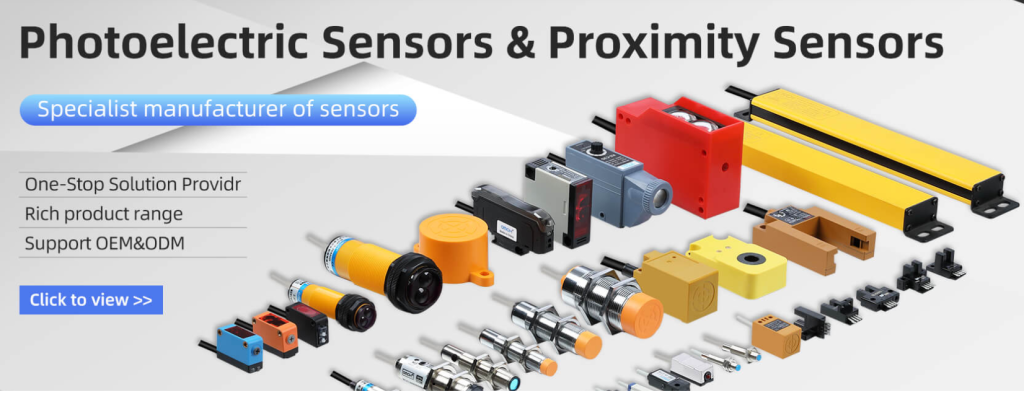
5. Proximity sensors
Proximity sensors detect the presence of nearby objects without physical contact. They are commonly used in electronic devices such as smartphones (to turn off the screen when the phone is held to the ear), in security systems and in industrial applications to detect objects.
6. Pressure sensors
Pressure sensors are used to measure the pressure of liquids or gases. Their signals are sent to an inverter (VFD) or PLC to control motor operation. They play an important role in industries such as automotive, aviation and healthcare. Applications include tire pressure monitoring, pressure measurement in pneumatic systems and blood pressure monitoring in healthcare.
7. Position sensors
Position sensors are used to determine the exact position of an object in space. They can be used in GPS systems, in industrial equipment to track the position of machine parts, and in medical devices to locate surgical instruments. Position sensors include optical, magnetic and capacitive sensors.
8. Photoelectric sensors (Photoelectric sensor)
Photoelectric sensors use light to detect the presence, position or changes of objects. They work by emitting a light beam and receiving the signal reflected from the object to determine presence or distance. Photoelectric sensors are widely used in industrial automation, security systems and measuring equipment.
9. Smoke sensors
Smoke sensors are designed to detect smoke in the air, giving early warning of fire risk. They are usually installed in buildings, homes and industrial facilities to protect property and people. The two common types are ionization sensors and photoelectric sensors.
10. Particle sensors
Particle sensors measure and analyze dust particles and pollutants in the air. They are often used in air filtration systems, medical equipment and environmental research. Particle sensors help monitor air quality so that timely action can be taken.
11. Motion sensors
Motion sensors detect the movement of objects within a specific area. They are widely used in security systems, automatic lighting and smart home appliances. Current types include infrared, ultrasonic and microwave motion sensors.
12. Metal sensors
Metal sensors are used to detect the presence of metal. They are commonly used in manufacturing, recycling and security. Metal sensors help identify and sort different types of metal, optimizing manufacturing and recycling processes.
13. Level sensors
Level sensors measure the level of liquids or solids in tanks. They are widely used in industries such as chemicals, food and beverage, and wastewater treatment. Types of level sensors include ultrasonic, pressure and float sensors.
14. Leak sensors
Leak sensors are designed to detect liquid or gas leaks in a system. They help prevent serious incidents by giving early warning when a leak is detected. Leak sensors are used in the oil and gas and chemical industries and in HVAC systems.
15. Humidity sensors
Humidity sensors measure the humidity of air or other substances. They are used in household appliances such as dehumidifiers and air conditioners, and in industries such as food, pharmaceuticals and electronics manufacturing. Humidity sensors help control the environment and ensure product quality.
16. Gas and chemical sensors
Gas and chemical sensors are used to detect and measure the concentration of gases and chemicals in the environment. They are commonly used in air quality monitoring systems, the chemical industry and occupational safety. These sensors help detect toxic gas leaks early and control pollution levels, protecting human health and the environment.
17. Force sensors
Force sensors measure the force applied to an object and are widely used in industry, healthcare and scientific research. Common applications include electronic scales and tensile and compressive force measuring devices. Force sensors help ensure accuracy in manufacturing and research while improving performance and safety.
18. Flow sensors
Flow sensors are designed to measure the velocity and flow rate of liquids or gases in pipes. They are commonly used in water supply systems, wastewater treatment and the oil and gas industry. Flow sensors help control and optimize production processes, ensuring efficiency and saving resources.
19. Defect sensors
Defect sensors are used to detect defects or damage in materials and structures. They are used in industries such as construction, aviation and manufacturing for quality inspection and safety assurance. Defect sensors help detect problems early, reducing risk and repair costs.
20. Flame sensors
Flame sensors detect the presence of fire or sparks. They are commonly used in fire alarm systems, industrial safety equipment and military applications. Flame sensors give early warning of fire and explosion risks, protecting property and people.
21. Electrical sensors
Electrical sensors measure electrical quantities such as voltage, current and resistance. They are used in power systems, measuring instruments and energy management. Electrical sensors help monitor and manage power systems effectively, ensuring safety and saving energy.
22. Contact sensors
Contact sensors detect contact between two surfaces or the presence of an object. They are used in household appliances, industrial machinery and automation systems. Contact sensors help control and monitor production processes, ensuring accuracy and performance.
23. Non-contact sensors
Non-contact sensors detect the presence or distance of an object without direct contact. They include infrared, ultrasonic and magnetic sensors. Non-contact sensors are used in security systems, automation and smart devices, improving performance and reliability.
V. What are sensors used for?
Sensors are used in many areas of life, such as daily living, commerce, security and air transport, … with many types of sensors such as heat sensors, air sensors, sound sensors, color sensors, frequency sensors, magnetic sensors …
Below are the most common applications for your reference
- In daily life: Sound sensors (e.g. clapping to turn off the lights), magnetic sensors (e.g. automatically turning off the lights when leaving a room).
- In industrial manufacturing: Sensors are mainly used to cut off current in case of overload, overheating or moisture to keep electrical equipment safe…
- In electronics: They are used in smartphones, tablets, smartwatches and digital cameras.
- In healthcare: Sensors are integrated into devices such as blood pressure monitors, blood glucose meters and ECG machines.
- In industry: Sensors are also used in automation systems, such as pressure sensors and temperature sensors.
- In transportation: optical sensors and distance sensors are used to monitor and control systems.
- In energy production: Used for environmental monitoring, such as measuring air quality
- In robotics and artificial intelligence, sensors help collect data and interact with the surrounding world.
VI. Tips for choosing a sensor
VI. Tips for choosing a sensor
When choosing a sensor, keep the following factors in mind
– Define your needs: What is the sensor for? Which quantity needs to be measured? What is the sensor’s operating environment?
– Choose the right sensor type: There are many types of sensors with different operating principles and functions. Choose the type that fits your needs and operating conditions.
– Specifications: Review the key specifications of the sensor, such as measuring range, accuracy, sensitivity, response time,…
– Price: Compare prices from different suppliers to choose a product that fits your budget.
– Supplier: Choose a reputable supplier to ensure product quality and after-sales service.
Sensors are an essential part of modern life, helping us monitor and control our surroundings effectively. With continuous technological progress, sensors are becoming ever more accurate and diverse, bringing many benefits to industry and daily life.
Finally, we are honored to announce that Vietnam Industrial System Manufacturing and Maintenance One Member Co., Ltd (PMS) is a distributor of the AGKB-M0524 series inductive proximity sensors
The start of this partnership is a stepping stone for the strong growth of quality, reputable OMCH – Made in China sensor lines across Vietnam’s industrial base in the coming time
Here again is the OMCH brand magnetic proximity sensor line